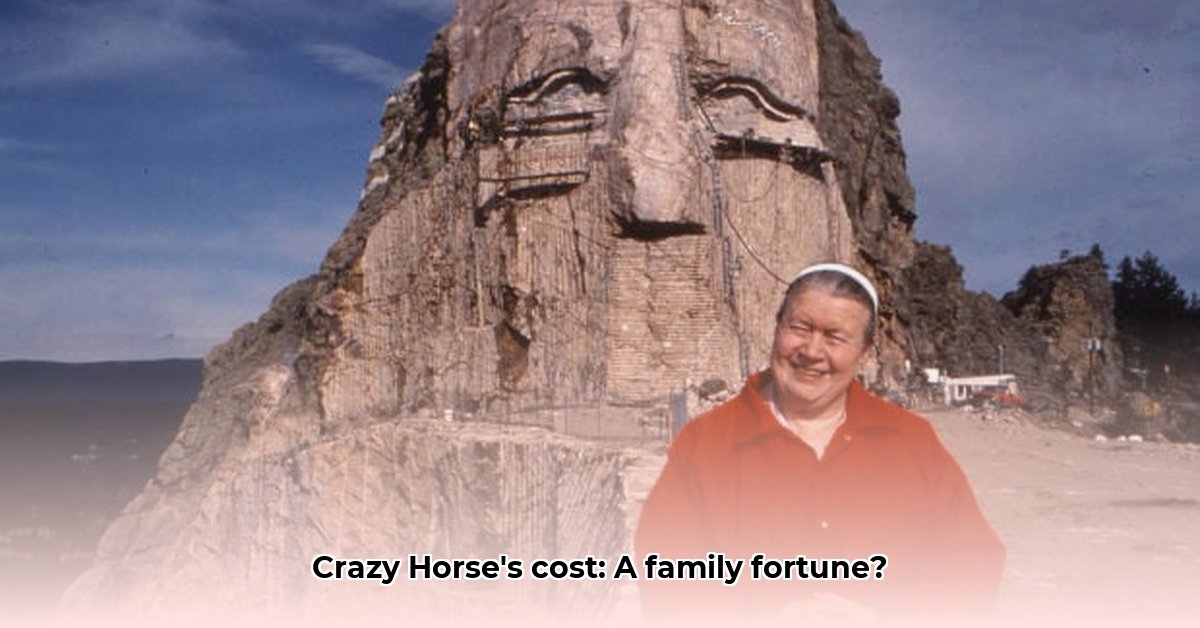
The Crazy Horse Memorial, a monumental carving etched into the Black Hills of South Dakota, stands as a breathtaking testament to a Lakota warrior. Yet, beneath the awe-inspiring scale of the project lies a complex financial narrative involving the Ziolkowski family and the Crazy Horse Memorial Foundation (CHMF). This investigation explores the family's net worth, its connection to the memorial's finances, and the resulting questions of transparency and accountability.
A Monumental Undertaking, Questionable Transparency
The CHMF reports substantial annual income; figures exceeding $6.9 million were reported in 2010, leading to estimates placing the Ziolkowski family's net worth, indirectly linked to the foundation, in the tens of millions of dollars. However, a significant portion of these funds seems not to be directly supporting the carving itself. Reports suggest that a surprisingly small percentage – approximately 5% in 2010 – was allocated to the actual carving of Crazy Horse.
This disparity raises crucial questions. Where are the remaining millions directed? A substantial portion appears to be designated for salaries of family members holding key positions within the foundation, with some individuals reportedly receiving substantial six-figure salaries annually. This fact, combined with the incredibly slow progress of the carving – projected to take centuries to complete – fuels speculation about the allocation of resources and the project's long-term financial sustainability. Isn't it concerning that such a monumental project progresses so slowly despite substantial revenues?
This lack of transparency is a significant concern. The availability of detailed financial statements is limited, hindering independent verification of how funds are utilized and whether they align with the memorial's stated cultural goals. This lack of open financial reporting naturally breeds suspicion and raises questions about equitable distribution of proceeds from this massive endeavor. How can we ensure responsible stewardship of such a significant public trust?
Analyzing the Discrepancy: Progress vs. Profits
The significant financial resources reported by the CHMF stand in stark contrast to the glacial pace of the carving's progress. This raises a critical question: Could the project's completion be accelerated with improved financial management? Would increased transparency foster greater donor confidence and potentially lead to substantial additional financial support? The current situation leaves both donors and the public largely in the dark.
This lack of transparency impacts multiple stakeholders. Native American communities have a vested interest in ensuring respectful representation of their cultural heritage. Donors deserve to know precisely how their contributions are utilized. Furthermore, the CHMF itself would benefit from improved financial practices, while independent oversight would strengthen accountability. The media plays a vital role in shedding light on the situation, as well, in order to promote more transparency and accountability.
Key Concerns and Potential Solutions
Three pivotal concerns arise from the available data:
- Exceedingly Slow Project Completion: The extremely slow progress raises serious doubts about the CHMF's genuine commitment to its artistic goals. Possible solutions include creating a revised, realistic timeline and budget, possibly even reassessing the project's overall scope.
- High Executive Compensation for Family Members: The substantial salaries paid to family members divert significant resources away from the actual carving. To address this, independent financial audits should be conducted, and existing salary structures reviewed and potentially adjusted.
- Severe Lack of Transparency: The lack of transparency erodes public trust and donor confidence. The solution is straightforward: publish detailed and readily-accessible financial reports regularly, ensuring clear, comprehensive disclosure of all transactions.
The Crazy Horse Memorial stands as a powerful symbol, but its story extends far beyond artistic achievement. It encompasses questions of legacy, art, family, and finance, demanding a critical examination of the Ziolkowski family's financial situation in relation to this colossal undertaking. Further investigation is crucial to fully understand the implications of this complex and evolving situation. The path forward demands increased transparency and active engagement from all stakeholders.